How a Pause Before Buying Can Support Better Spending Decisions
A pause does not have to mean no. It creates enough room to ask what a purchase is being asked to do.
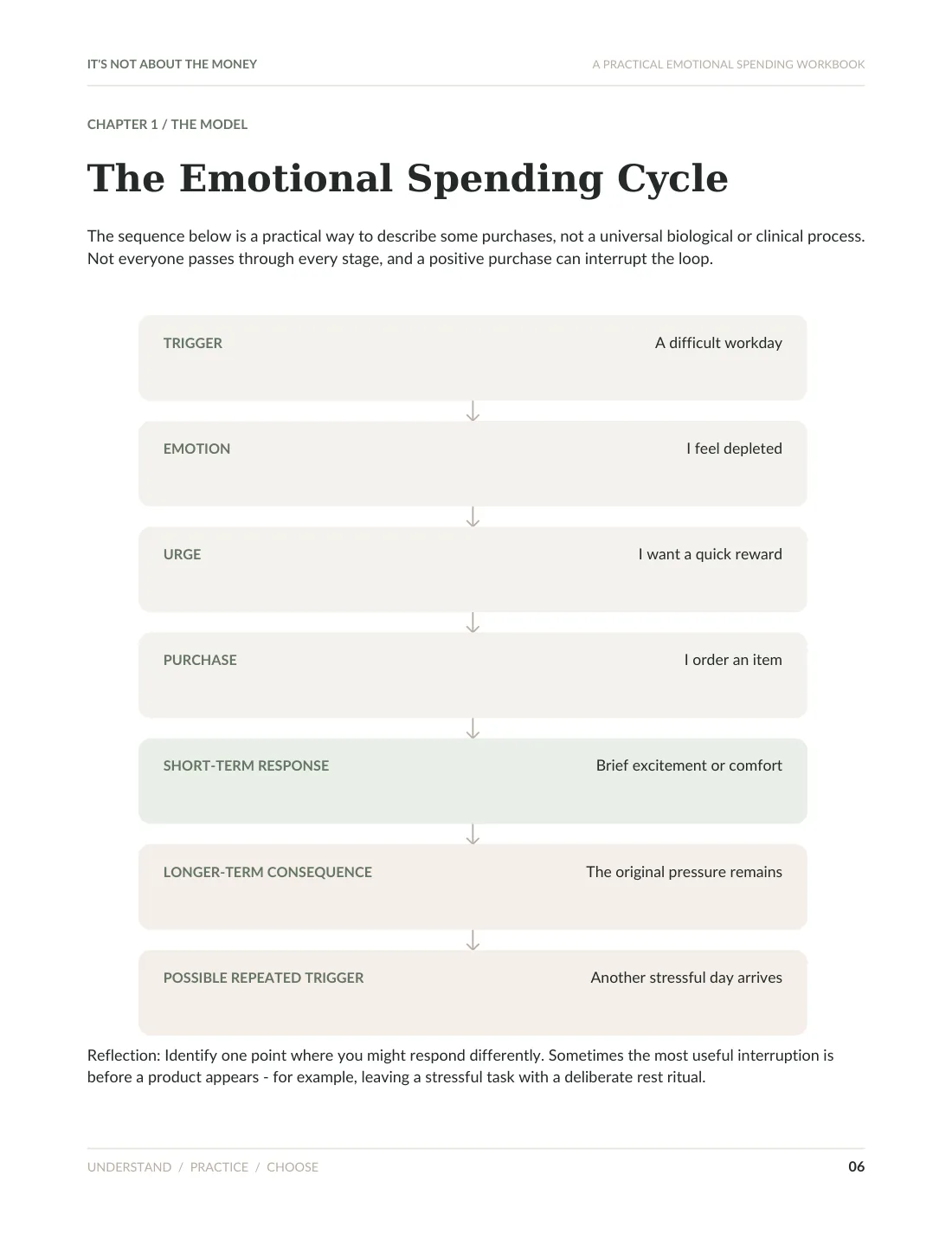
You cannot always prevent an urge, and you do not need to. A useful skill is creating a little space between noticing a desire and deciding what to do.
Why urgency feels so convincing
A fleeting offer or an almost-empty cart can make waiting feel costly. But an intense impulse is not the same as an obligation. Research on everyday desires found that whether people act on them depends partly on conflict and on the situation (Hofmann et al., 2012). It did not establish a universal number of seconds needed to outlast an urge, so the right pause is one that suits your own context.
Naming what is happening
Emotion-regulation research describes several ways people influence their emotional experience, including changing situations, attention, and interpretations (Gross, 1998). Laboratory work on affect labeling found that putting feelings into words altered responses to unpleasant images (Lieberman et al., 2007).
That research does not prove that saying "I feel anxious" reduces shopping. Still, naming the feeling may help you pause long enough to choose your next step.
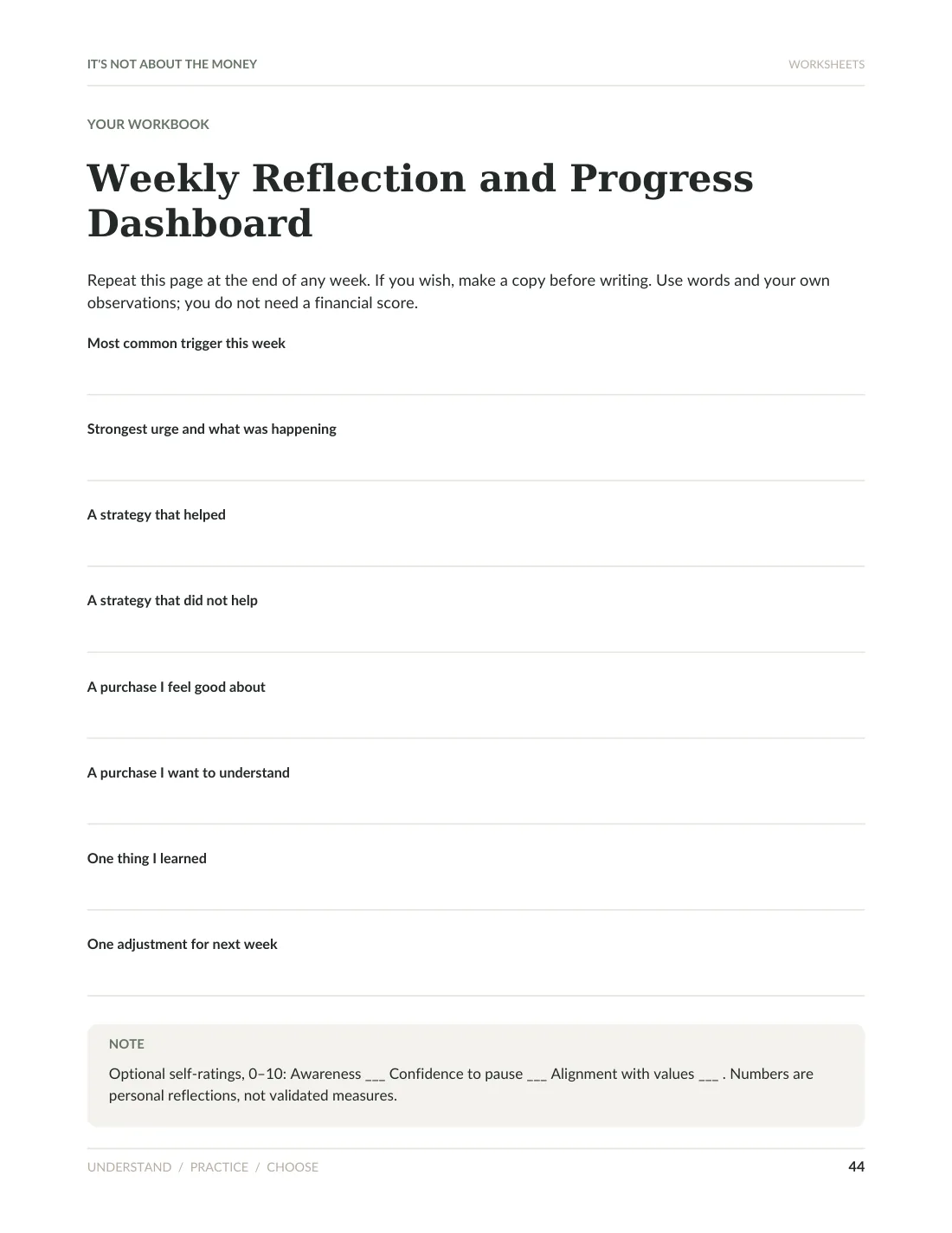
Plan before the difficult moment
Implementation intentions are specific plans in the form "If this situation occurs, then I will take this action." A large meta-analysis found benefits for reaching goals across many contexts (Gollwitzer & Sheeran, 2006). For example:
- If I open a shopping app after a tense call, then I will close it and walk outside for five minutes.
- If a sale alert arrives at night, then I will add the item to a list and look again tomorrow.
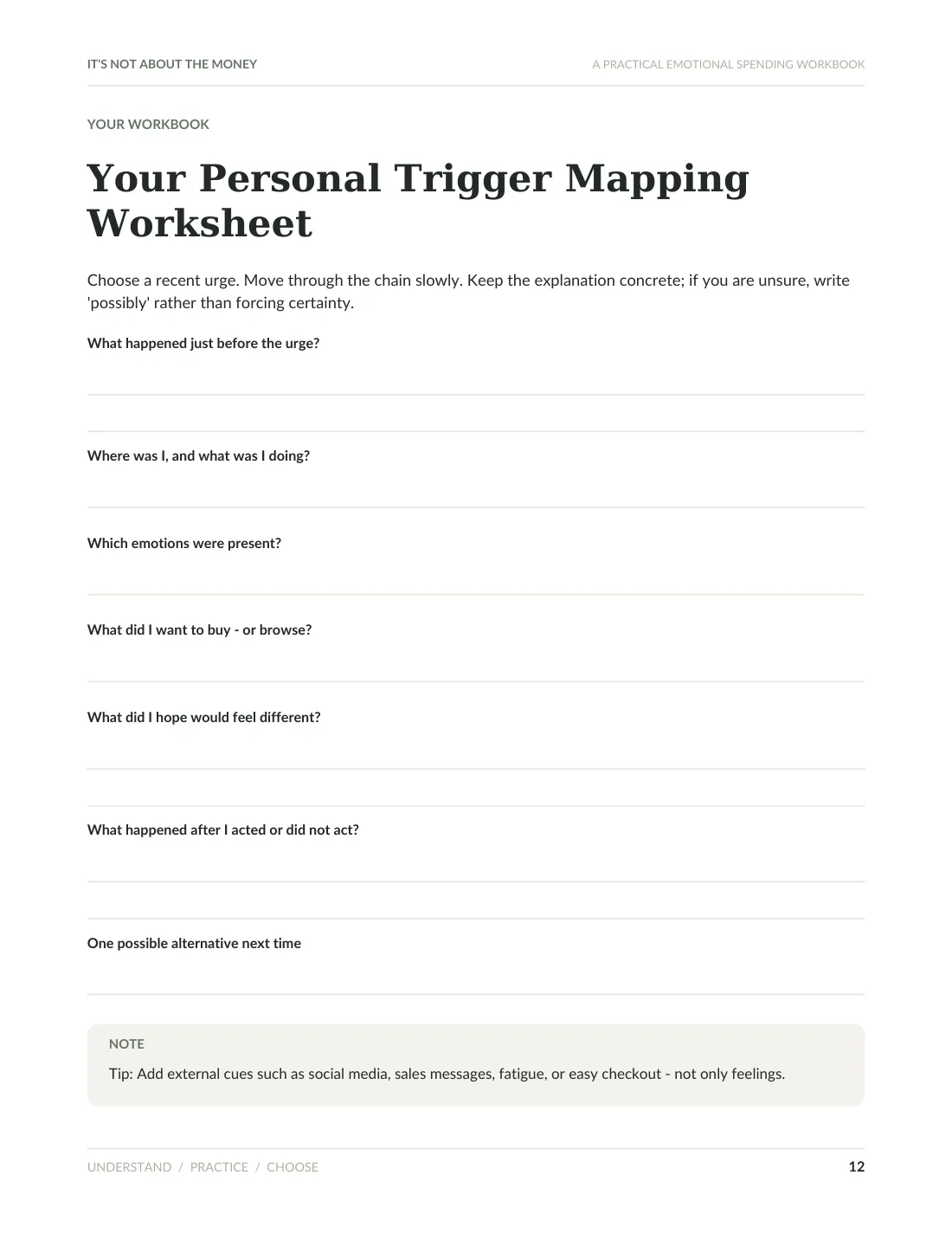
Three questions before checkout
- What am I expecting from this?
- What would change if I waited until tomorrow?
- Is anything important made harder if I spend this money now?
The answer may still be yes, buy it. The difference is having asked.
Choose a pause that fits
A brief pause may suit a small optional item, and a longer one may suit something bigger. Choose amounts and durations that reflect your own resources. These are personal decision experiments, not research-backed thresholds. A pause is useful only when it serves the situation, so it should never delay something you truly need.
References
- Gollwitzer, P. M., & Sheeran, P. (2006). Implementation intentions and goal achievement: A meta-analysis of effects and processes. Advances in Experimental Social Psychology, 38, 69–119. doi.org/10.1016/S0065-2601(06)38002-1
- Gross, J. J. (1998). The emerging field of emotion regulation: An integrative review. Review of General Psychology, 2(3), 271–299. doi.org/10.1037/1089-2680.2.3.271
- Hofmann, W., Baumeister, R. F., Förster, G., & Vohs, K. D. (2012). Everyday temptations: An experience sampling study of desire, conflict, and self-control. Journal of Personality and Social Psychology, 102(6), 1318–1335. doi.org/10.1037/a0026545
- Lieberman, M. D., et al. (2007). Putting feelings into words: Affect labeling disrupts amygdala activity in response to affective stimuli. Psychological Science, 18(5), 421–428. doi.org/10.1111/j.1467-9280.2007.01916.x
This article is general education, not personalized financial advice, psychotherapy, diagnosis, or medical treatment. If spending feels uncontrollable, causes severe distress, or threatens basic needs, consider a qualified mental health professional or a nonprofit or regulated debt adviser.