Why Do We Shop When We're Stressed?
After a hard day, buying something can feel like the fastest way to feel better. Here is what research can, and cannot, tell us about why.
You finish a demanding day, sit down, and open a shopping app without really deciding to. Twenty minutes later, something is in your cart. If that sounds familiar, you are not unusual, and it does not mean you are bad with money.
Shopping offers more than a product
Shopping can provide novelty, anticipation, distraction, and the hope that life will feel a little better. After a stressful day, it can also feel like the quickest way to finish something and receive a reward. When work is unresolved, a purchase is a small task you can complete.
What research suggests
Researchers have studied this from several directions, and the findings are more specific than the popular idea of "retail therapy."
In a set of experiments, making shopping choices reduced lingering sadness in specific laboratory circumstances, partly because choosing restored a sense of personal control (Rick et al., 2014). That finding does not mean that shopping reliably treats sadness or stress.
Other consumer research suggests that mood-repair purchases can be deliberate and are not always followed by guilt (Atalay & Meloy, 2011). So an emotionally motivated purchase is not automatically reckless.
Experiments on emotional distress found that people sometimes put short-term mood improvement ahead of restraint (Tice et al., 2001). These studies were not tests of shopping, but they help explain the conflict between comfort now and goals later.
Why the relief may not last
Before paying, you may picture relief or a fresh start. The item may deliver part of that. But the stressful workload, the argument, or the exhaustion is often still there afterward. Relief can be real and brief, and still not be the best answer to the underlying need.
A more useful question
Instead of asking "Was this a bad purchase?", try asking "What job was I hoping this purchase would do?"
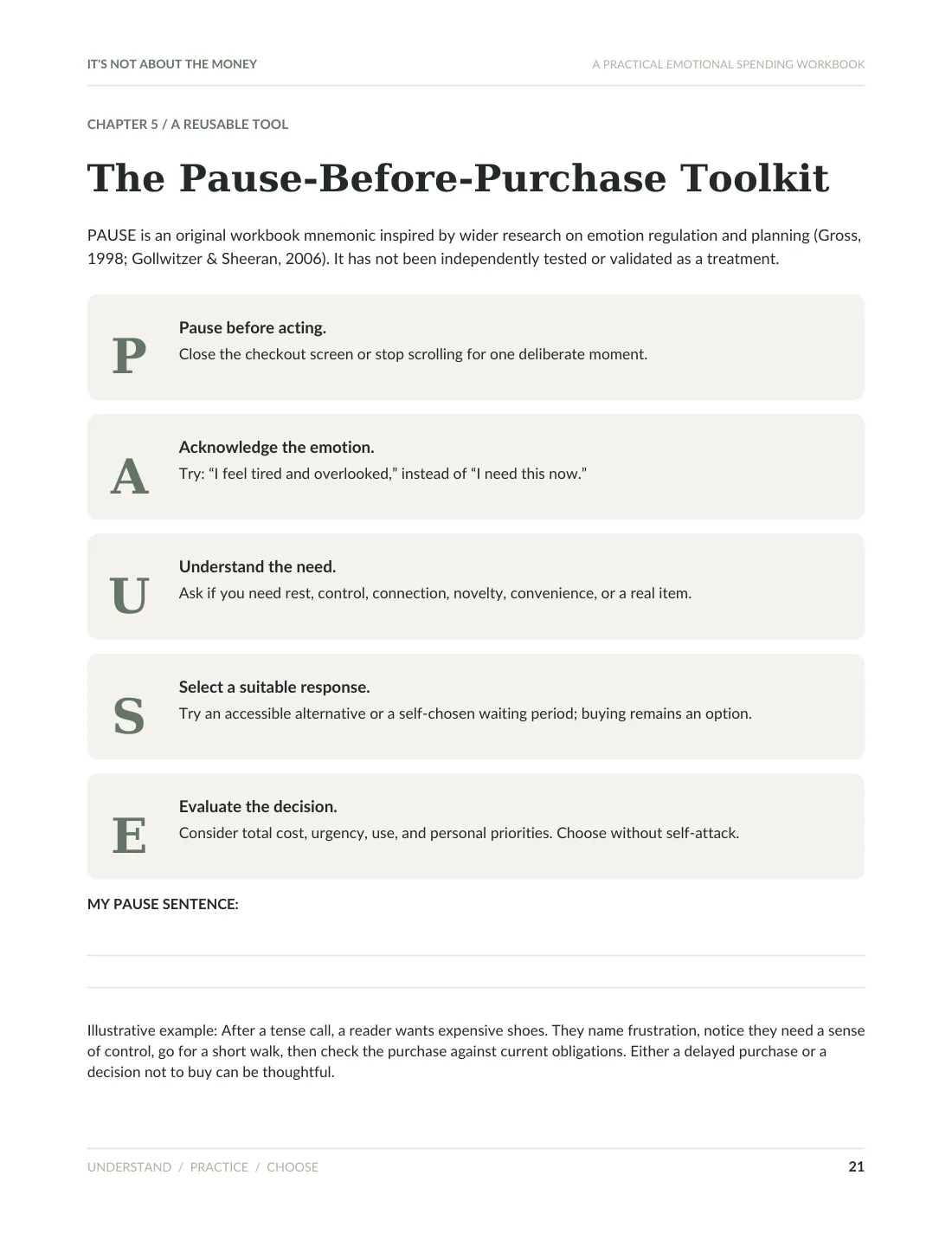
If the answer is rest, you may need a short transition between work and home. If it is control, one small decision about the actual problem may help. If it is a real item you can afford, buying it may be perfectly reasonable.
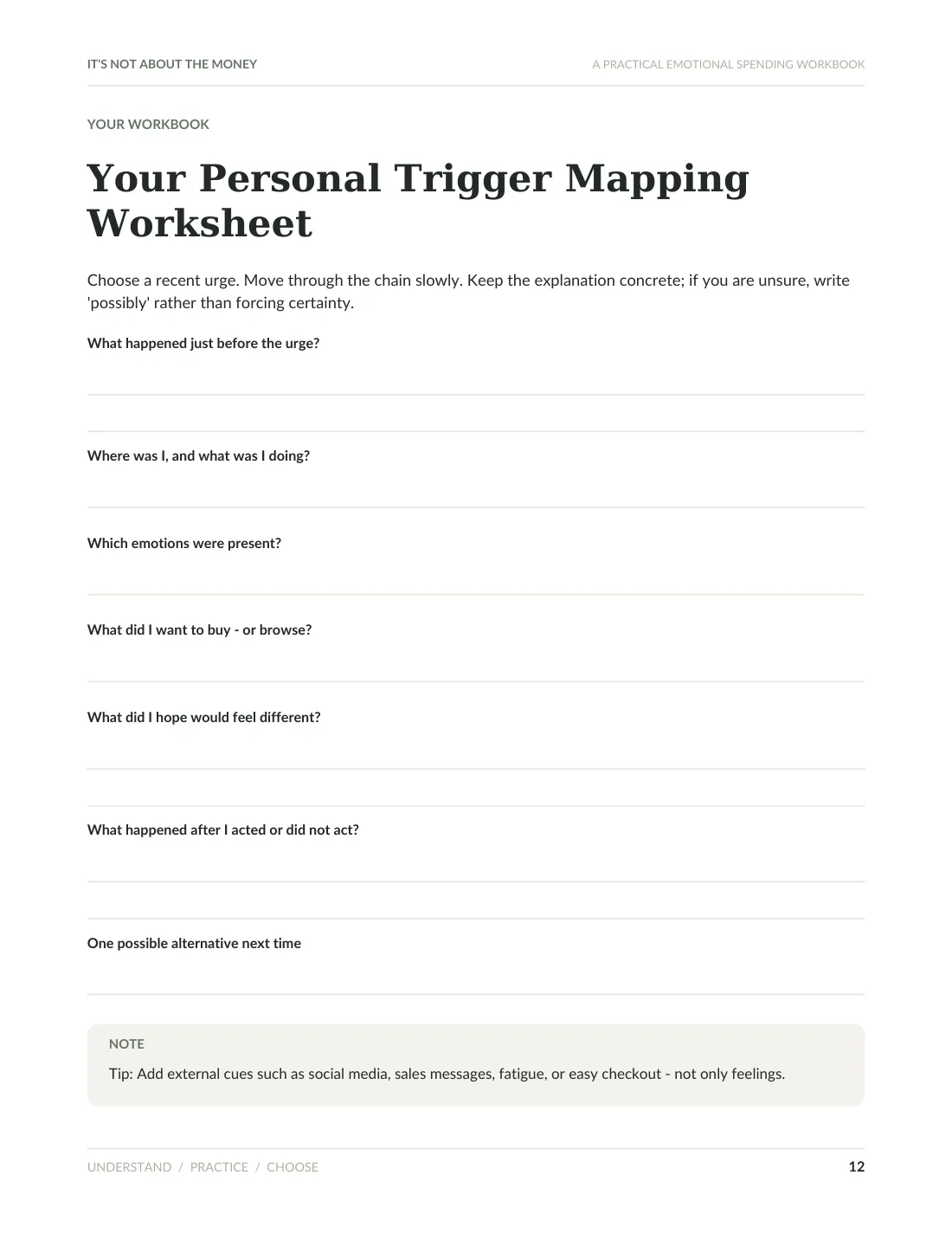
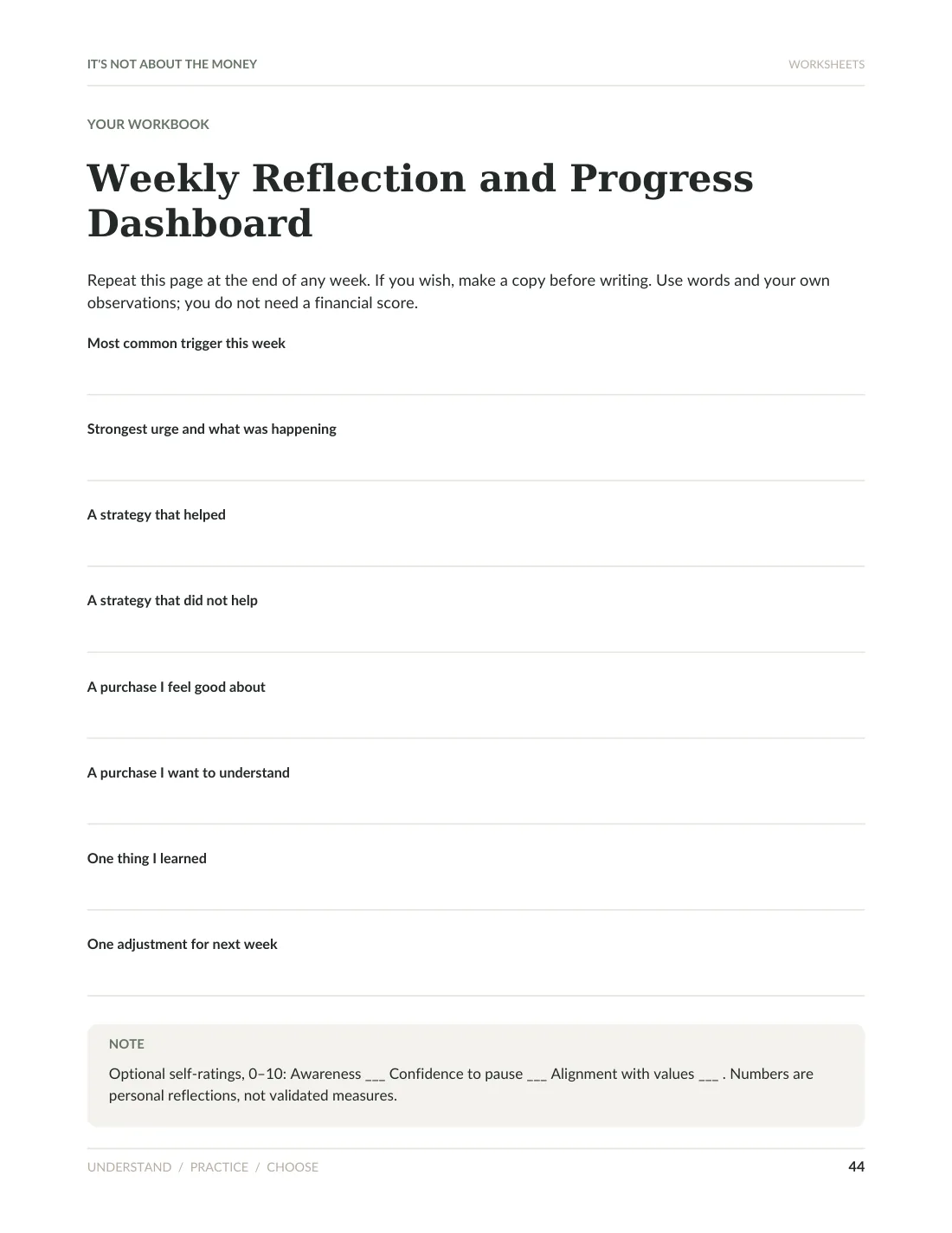
The next time you notice the urge, write down what you expect the purchase to change. Check again a day later. You are not trying to catch yourself out. You are collecting useful information.
References
- Atalay, A. S., & Meloy, M. G. (2011). Retail therapy: A strategic effort to improve mood. Psychology & Marketing, 28(6), 638–659. doi.org/10.1002/mar.20404
- Rick, S. I., Pereira, B., & Burson, K. A. (2014). The benefits of retail therapy: Making purchase decisions reduces residual sadness. Journal of Consumer Psychology, 24(3), 373–380. doi.org/10.1016/j.jcps.2013.12.004
- Tice, D. M., Bratslavsky, E., & Baumeister, R. F. (2001). Emotional distress regulation takes precedence over impulse control: If you feel bad, do it! Journal of Personality and Social Psychology, 80(1), 53–67. doi.org/10.1037/0022-3514.80.1.53
This article is general education, not personalized financial advice, psychotherapy, diagnosis, or medical treatment. If spending feels uncontrollable, causes severe distress, or threatens basic needs, consider a qualified mental health professional or a nonprofit or regulated debt adviser.