How to Recognize Your Emotional Spending Triggers
A trigger is rarely one thing. Learn to spot the mix of feeling, time, place, and access that makes buying more appealing.
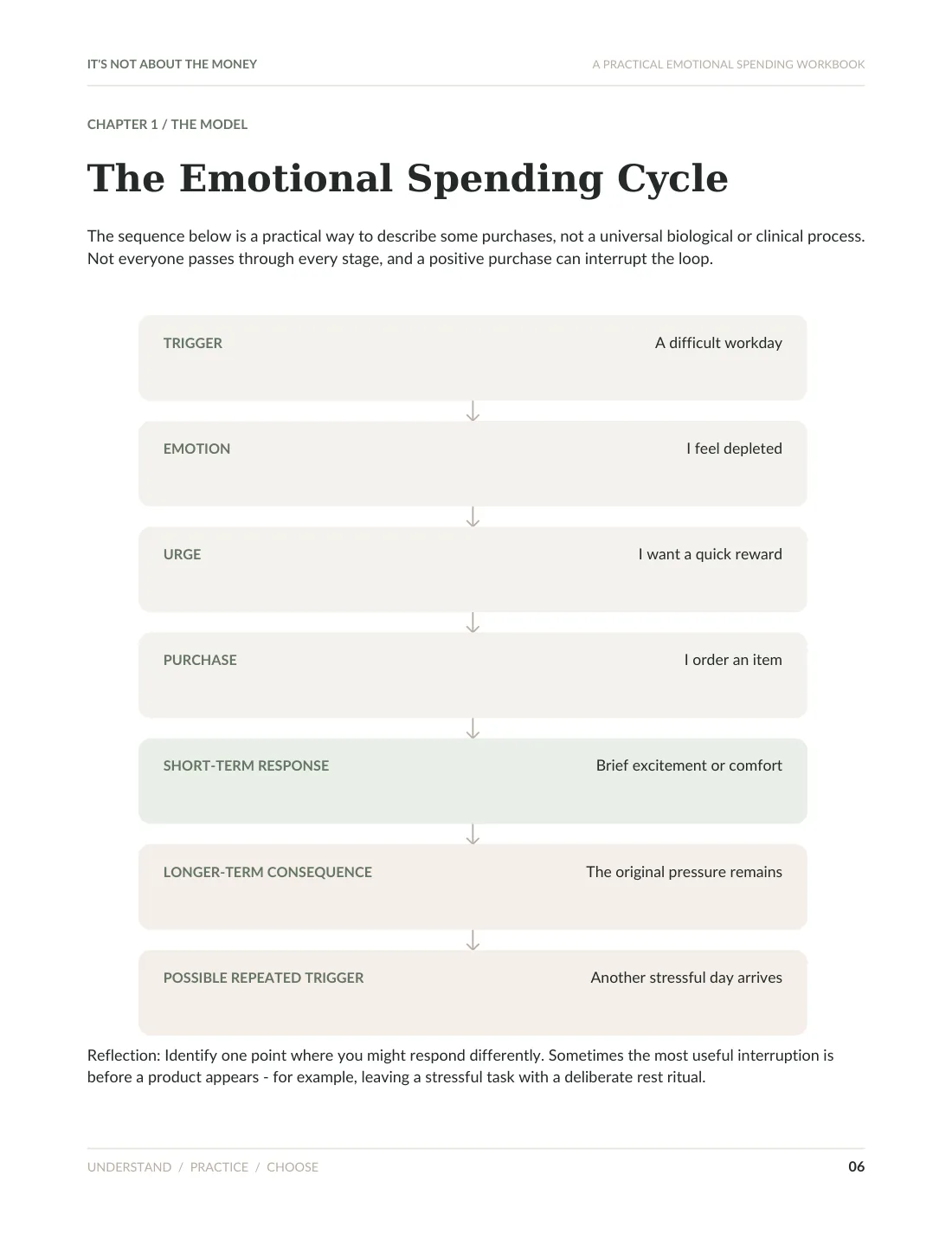
A trigger is a situation, cue, feeling, or thought that makes buying more appealing. Triggers are not commands. They are invitations to notice what tends to happen next.
Internal and external cues
Some triggers are internal, such as frustration, fatigue, or restlessness. Others come from your surroundings: an advertisement, a notification, a familiar store, or the time of day.
They often work together. A sale alert may mean very little when you feel rested. After a difficult conversation, the same alert can look like an easy distraction.
Why "I was stressed" is not enough
A stressful day does not make every person shop, and the same person might shop after stress one day and call a friend on another. What changed? Perhaps sleep, access to money, an app that was already open, or who was around.
Your strongest cue may be a combination of emotion, time, place, and access. That is why a useful record includes the conditions, and not only the feeling.
Different feelings ask for different things
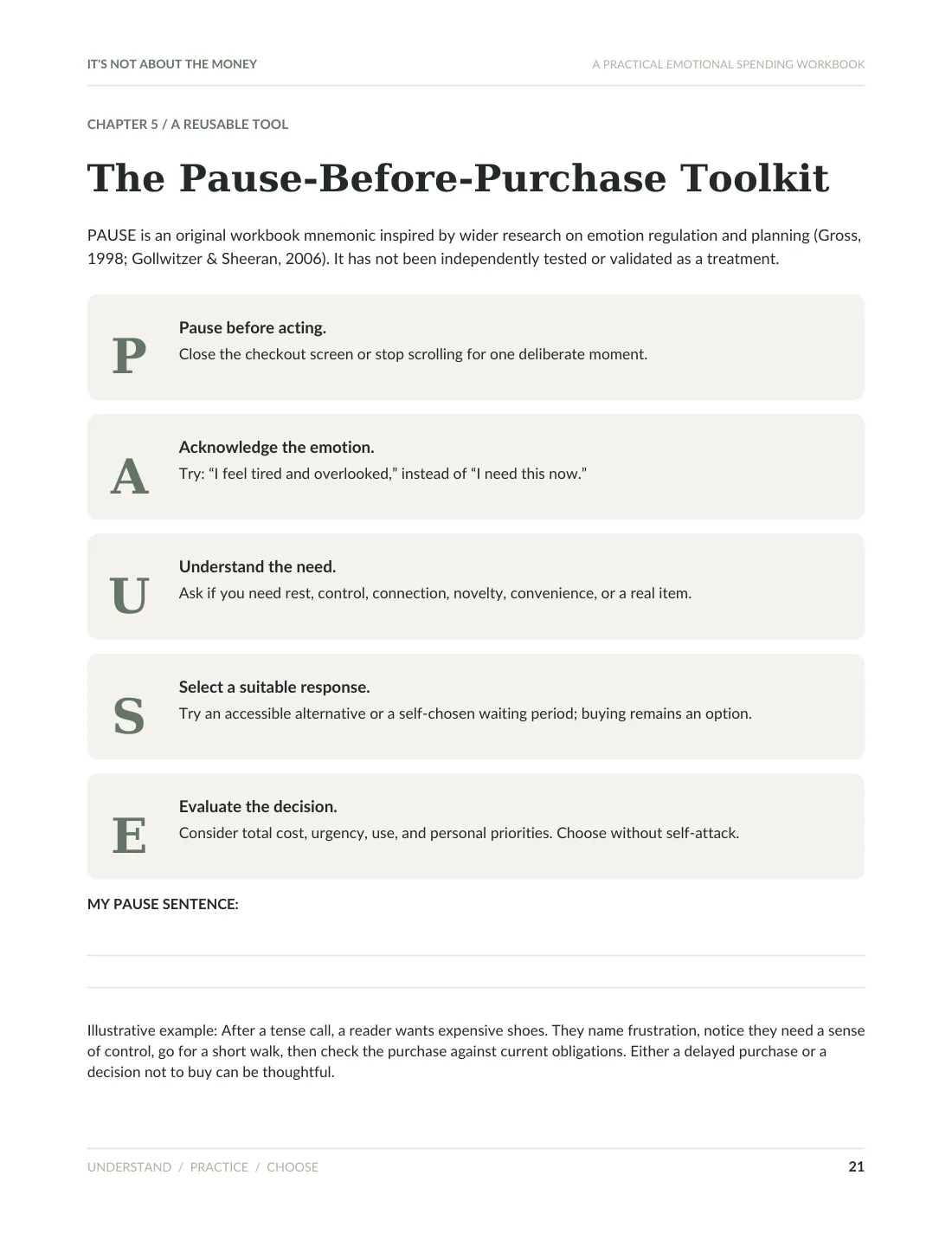
- Stress often asks for relief. You may need rest, help, or fewer demands.
- Sadness or loneliness may ask for contact. A delivery can create anticipation, but it cannot always replace being understood.
- Boredom asks for stimulation. You may want the experience of discovering something more than the item itself.
- Celebration asks for recognition. Pleasure is legitimate, and you can decide on purpose how to mark good news.
Emotions are rarely tidy. You may feel tired and proud at the same time. Two words are fine if one is not enough.
Try the field-note method
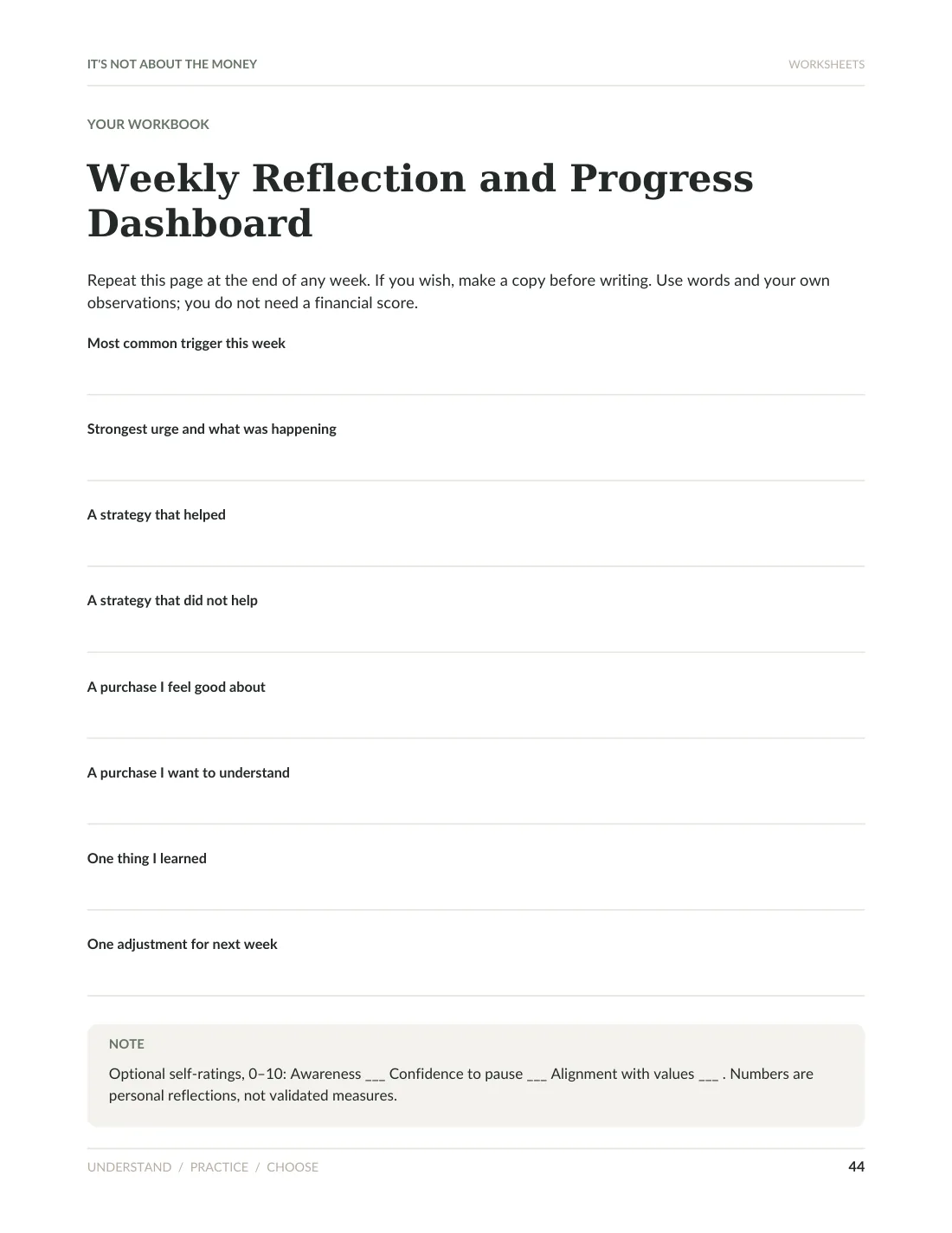
For a week, describe urges in neutral language, as if you were taking field notes:
9:40 p.m., scrolling, tired, saw discount, wanted headphones, hoped for excitement.
This tells you far more than "I always waste money." It gives you a time, a setting, a feeling, a cue, and an expectation, and each of these is something you can work with.
Look for the pattern
After several entries, look for what repeats. Which feelings appear most often? Which time of day? Which app or message? You do not need to identify a deep psychological cause. Start with what happened, the emotion you can name, and what the purchase seemed to offer.
Your first goal is simply to notice one urge, even if you do not buy anything.
This article is general education, not personalized financial advice, psychotherapy, diagnosis, or medical treatment. If spending feels uncontrollable, causes severe distress, or threatens basic needs, consider a qualified mental health professional or a nonprofit or regulated debt adviser.