How to Build Spending Boundaries Without Giving Up Everything You Enjoy
A good boundary is decided while you are calm and helps you choose later. It should protect what matters without making life smaller.
A boundary is a decision you make while calm to guide yourself when your attention is divided. A good one is specific, realistic, and flexible when needs change. It is not a rule designed to punish you for having emotions.
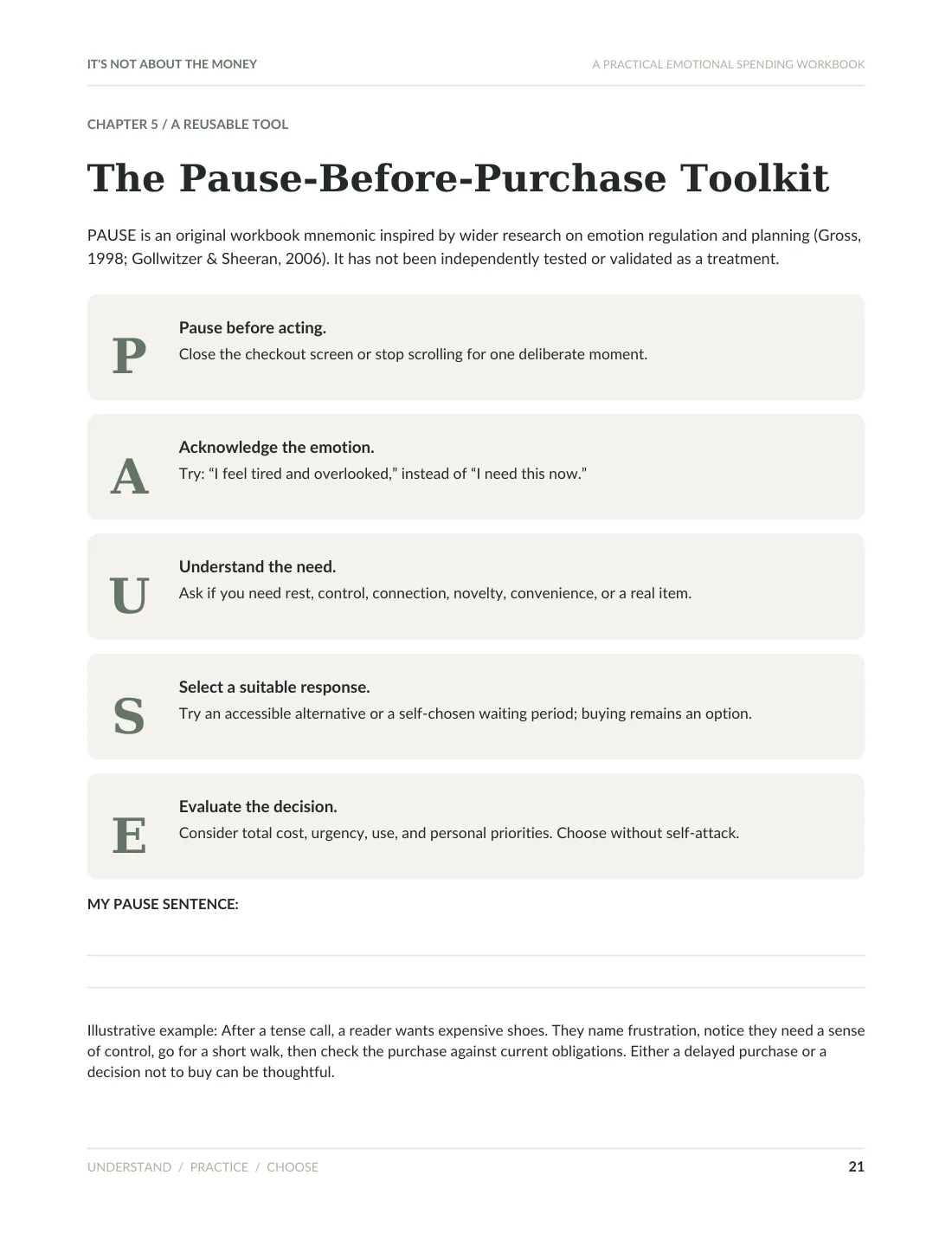
Start with categories, not moral labels
Essential purchases are those needed for the household, health, work, or basic functioning. Optional purchases can include meaningful enjoyment. Rather than calling things "good" or "bad," ask three questions: Is this necessary now? Was it planned? What would paying for it affect?
Make your surroundings do some of the work
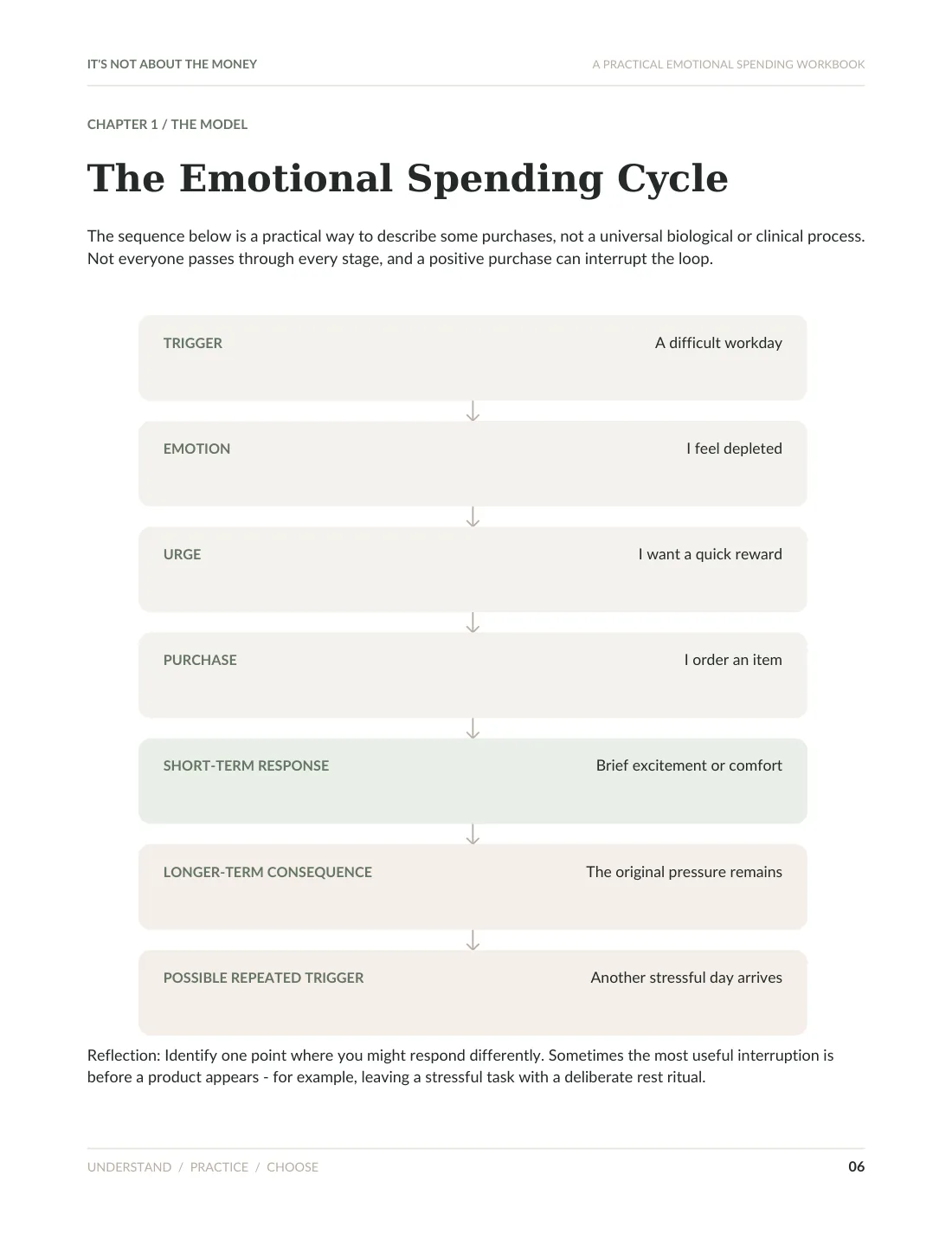
Repeated actions in familiar contexts can become more automatic through learned links with cues (Wood & Neal, 2007). That does not prove that deleting an app will change your finances, but it suggests a reasonable experiment: make unhelpful cues less visible.
- Move shopping apps away from your home screen.
- Silence promotional alerts.
- Unsubscribe from messages you no longer value.
- Remove a stored payment method from optional shopping accounts.
Keep access to what you need. If you use an app for necessities, change only the settings that prompt unplanned browsing.
Set waiting periods that are yours
Choose a brief pause for small optional items, a longer pause for medium ones, and a planned review for large or ongoing commitments. Set the price bands to suit your own resources. These are personal experiments rather than universal rules.
A wish list can help too. Note the date, the estimated total cost, the intended use, and when you will reconsider. Remove what no longer interests you, and buy what still fits your priorities.
Keep joy in the plan
When feasible, make room for discretionary spending you truly value. A realistic plan may protect a small, planned pleasure more effectively than a rigid ban that invites frustration. Research discussions of spending and well-being suggest that the way people use money can matter, but they do not prescribe the same purchases for everyone (Dunn et al., 2011).
When money is extremely tight, the first goal may be safeguarding essentials and seeking assistance rather than building an entertainment allowance.
Test one change at a time
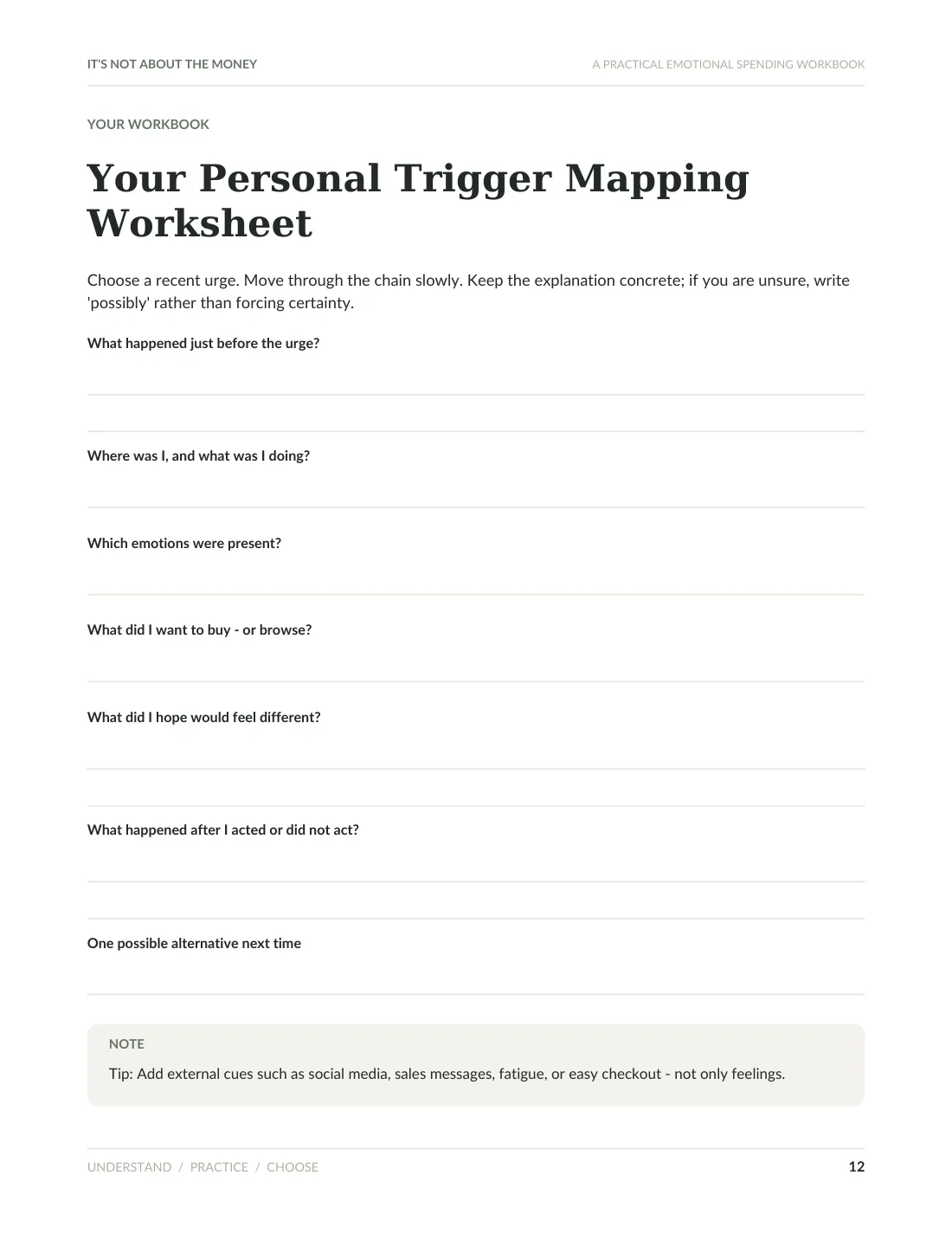
Choose the cue that appears most often in your notes. Change it for seven days and see whether the adjustment feels practical. If it does not, revise it instead of assuming you lack discipline.
A boundary succeeds when it helps you decide, not when it makes life smaller.
References
- Dunn, E. W., Gilbert, D. T., & Wilson, T. D. (2011). If money doesn't make you happy, then you probably aren't spending it right. Journal of Consumer Psychology, 21(2), 115–125. doi.org/10.1016/j.jcps.2011.02.002
- Wood, W., & Neal, D. T. (2007). A new look at habits and the habit-goal interface. Psychological Review, 114(4), 843–863. doi.org/10.1037/0033-295X.114.4.843
This article is general education, not personalized financial advice, psychotherapy, diagnosis, or medical treatment. If spending feels uncontrollable, causes severe distress, or threatens basic needs, consider a qualified mental health professional or a nonprofit or regulated debt adviser.